
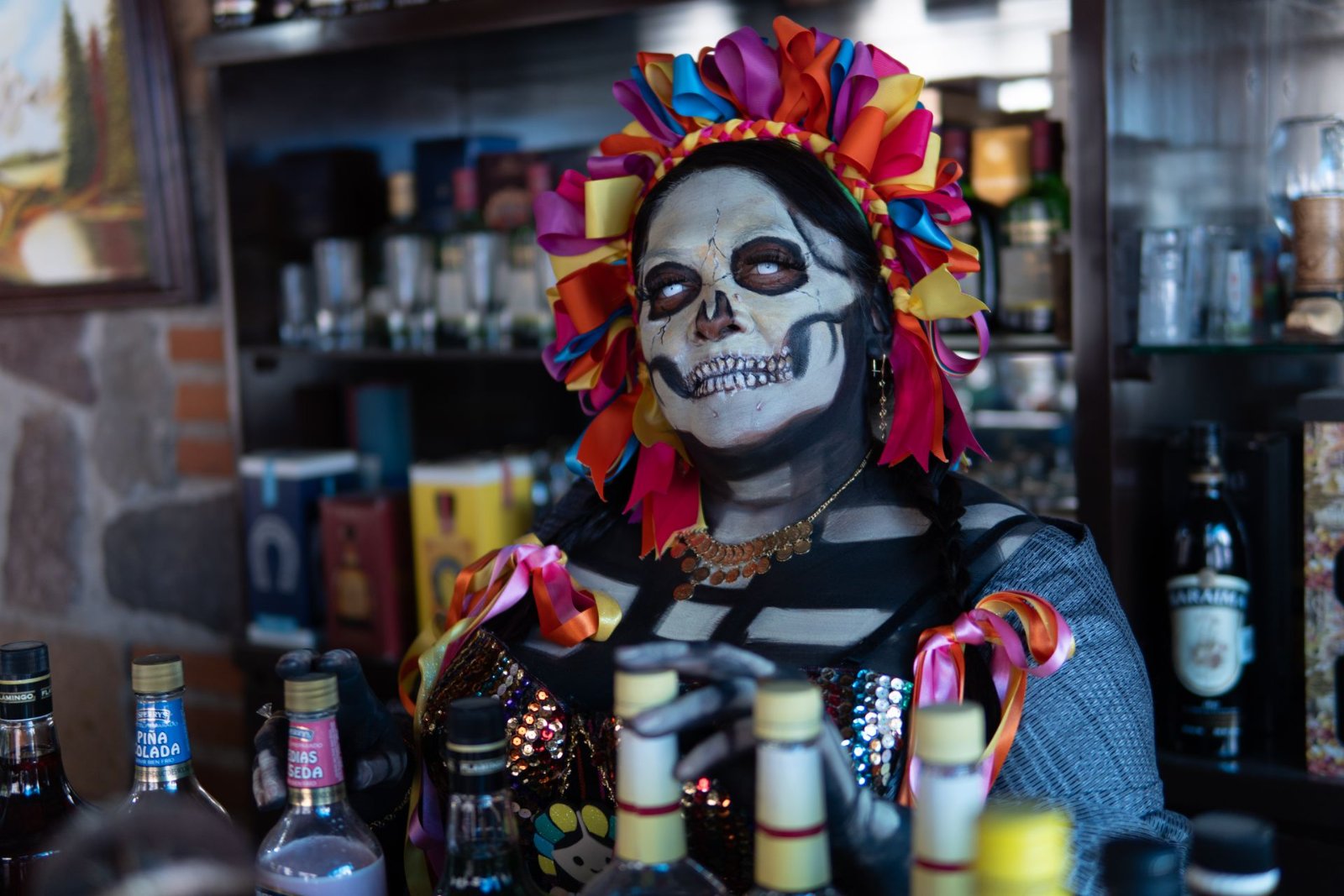
Every October, the streets of San Diego transform into a spectacular carnival of creativity, laughter, and festive energy. From the Gaslamp Quarter to Pacific Beach, thousands of costumed revelers pour into bars and nightlife venues, embodying characters far removed from their everyday selves. But have you ever stopped to wonder why putting on a mask or a full costume seems to fundamentally change the way people behave — sometimes dramatically — during events like a Halloween bar crawl? The answer lies deep within the human brain, and the science behind it is as fascinating as the costumes themselves.
This article explores the neurological and psychological mechanisms behind costume anonymity, how wearing a disguise affects risk assessment, social inhibition, and decision-making, and what participants in San Diego’s legendary Halloween bar crawl scene should understand before they head out for a night of costumed fun. Whether you’re planning to join Barcrawlerz for their iconic Halloween event or simply curious about the psychology of the holiday, this deep dive into the science of costume-induced behavior will leave you both informed and entertained.
Understanding the Psychology of Anonymity: Why Masks Change Everything
Human beings are deeply social creatures, and much of our behavior is regulated by social awareness — the constant, often subconscious monitoring of how others perceive us. This self-monitoring is tied to a psychological concept known as public self-awareness, which is the recognition that we are visible to others and subject to their evaluation and judgment.
When we put on a costume — especially one that obscures our identity — something remarkable happens. The brain begins to reduce the weight it places on social consequences. This phenomenon, well-documented in psychological literature, is known as deindividuation. It describes a state in which individuals feel less personally accountable for their actions because they perceive themselves as anonymous or part of a larger group identity.
Deindividuation and the Halloween Effect
Deindividuation was first formally described by psychologist Leon Festinger in the 1950s and later expanded upon by Philip Zimbardo in the 1970s. Zimbardo’s research showed that when people feel anonymous — whether through a physical disguise or simply being part of a large crowd — they are more likely to engage in behaviors they would normally suppress. This includes both positive behaviors like increased generosity and spontaneity, and negative behaviors like aggression or recklessness.
Halloween provides the perfect storm for deindividuation. Participants are wearing costumes that visually transform them, they are surrounded by others who are similarly disguised, they are in a festive social context that encourages boundary-pushing, and they are often consuming alcohol — which independently reduces inhibition at the neurological level.
“When the mask goes on, the social contract is temporarily renegotiated. People don’t just feel like someone else — neurologically, they begin to process social risk differently.” — Adapted from social neuroscience research on anonymity and behavior
The Role of the Prefrontal Cortex in Social Behavior
To understand why costumes affect behavior, we need to look at the brain region most responsible for social regulation: the prefrontal cortex (PFC). This area of the brain is involved in impulse control, decision-making, risk assessment, and the evaluation of social consequences. When we are in normal, identified social situations, the PFC is highly active — constantly weighing the potential outcomes of our actions against social norms.
Research in social neuroscience suggests that conditions of anonymity reduce the activation of certain PFC circuits related to self-monitoring and consequence evaluation. In simple terms, the brain’s internal “social editor” becomes less active when we feel anonymous. This is why the person who would never dance in public at a regular bar might be the first one on the dance floor at a Halloween bar crawl in full costume.
Neurological Mechanisms Behind Social Disinhibition During Costume Events
Social disinhibition — the loosening of behavioral restraints in social settings — during Halloween events isn’t purely psychological. There are measurable neurological processes at work that help explain why costumed participants behave so differently from their everyday selves.
Dopaminergic Reward Pathways and Novelty-Seeking Behavior
One of the most significant neurological drivers of Halloween bar crawl behavior is the brain’s dopaminergic reward system. Dopamine, often called the “feel-good” neurotransmitter, is released in response to novel, exciting, and rewarding stimuli. Wearing a creative costume, receiving compliments on it, encountering unexpected and entertaining characters, and navigating the vibrant social landscape of a San Diego Halloween event all trigger dopamine release.
This dopamine surge encourages novelty-seeking behavior — the desire to try new things, take social risks, and push beyond one’s usual comfort zone. In the context of a Halloween bar crawl, this might manifest as striking up conversations with strangers, trying new drinks, visiting bars you’ve never been to before, or participating in costume contests you’d normally shy away from.
The Amygdala, Fear Response, and Costume-Induced Confidence
The amygdala is the brain’s alarm system — the region responsible for processing fear, social anxiety, and threat detection. In everyday social situations, the amygdala is often highly active, generating feelings of self-consciousness, social anxiety, or fear of rejection that inhibit spontaneous behavior.
Interestingly, wearing a costume appears to reduce amygdala reactivity in social contexts. When participants feel that their “true identity” is hidden, the perceived social threat of embarrassment or rejection diminishes. This is why many people report feeling more confident, outgoing, and socially adventurous in costume than they do in their everyday clothing. The mask literally reduces the brain’s fear response in social situations.
Mirror Neurons and Character Embodiment
Another fascinating neurological component of costume behavior involves mirror neurons — brain cells that activate both when we perform an action and when we observe someone else performing the same action. Mirror neurons are believed to play a key role in empathy, imitation, and the internalization of behavioral patterns.
When someone dresses as a specific character — say, a fearless superhero, a carefree pirate, or a glamorous celebrity — mirror neurons may contribute to a process called character embodiment. The costume wearer begins to unconsciously adopt behavioral traits associated with their chosen character. This isn’t just playful imagination; it reflects genuine shifts in self-perception and behavioral expression that have measurable psychological effects.
“Dressing the part isn’t just an external change — it’s an internal one. The brain begins to process identity differently when the body is visually transformed.” — Concept derived from embodied cognition research
Risk Assessment Changes Among Costumed Halloween Bar Crawl Participants
Perhaps the most practically important aspect of costume anonymity is how it affects risk assessment — the cognitive process by which we evaluate the potential dangers or negative consequences of our actions. During Halloween events, particularly bar crawls in busy urban environments like San Diego’s Gaslamp Quarter or Mission Hills, altered risk assessment can have real-world implications.
How Anonymity Skews Risk Perception
Under normal circumstances, risk assessment involves a careful (if often unconscious) weighing of potential benefits against potential costs. The prefrontal cortex plays a central role in this process, drawing on past experiences, social norms, and anticipated consequences to guide decision-making.
Costume anonymity disrupts this process in several ways. First, because the individual feels less personally identifiable, the perceived social cost of risky behavior decreases — they feel less accountable. Second, the festive atmosphere of a Halloween event creates a collective permission structure — a shared social understanding that “tonight, different rules apply.” Third, the presence of alcohol, which independently suppresses PFC function, compounds the effect of costume-induced disinhibition.
The result is that costumed bar crawl participants may engage in behaviors they would normally consider too risky — whether that’s accepting drinks from strangers, wandering into unfamiliar neighborhoods, spending beyond their budget, or making impulsive social decisions — without fully recognizing the elevated risk involved.
Group Dynamics and Collective Risk-Taking
Halloween bar crawls are inherently group activities, and group dynamics add another layer of complexity to risk assessment. Research in social psychology consistently shows that people are more willing to take risks in group settings than they are individually — a phenomenon known as risky shift or, more broadly, group polarization.
When a group of costumed friends is collectively experiencing deindividuation, the risk-taking tendencies of individual members can amplify each other. Each person’s reduced inhibition reinforces the group’s overall willingness to push boundaries, creating a feedback loop that can lead to increasingly bold or risky behavior as the night progresses.
This is why organized, structured Halloween bar crawl events — like those hosted by Barcrawlerz in San Diego — can actually play an important safety role. By providing a pre-planned route, vetted venues, and a built-in social structure, organized crawls help channel the energy of group disinhibition into fun, positive experiences while reducing the likelihood of genuinely risky decisions.
Gender Differences in Costume-Related Risk Assessment
Research also suggests that costume anonymity may affect risk assessment differently across gender lines. Studies on deindividuation and anonymity have found that men and women sometimes respond to conditions of anonymity in distinct ways, with men showing greater tendencies toward externally directed risk-taking (such as physical challenges or confrontations) and women showing more socially oriented shifts (such as increased openness to social interaction or emotional expression).
It’s worth noting that these are general tendencies observed in research populations and that individual variation is enormous. Nevertheless, understanding these patterns can help event organizers and participants alike be more aware of the specific ways that costume anonymity might influence behavior within their social groups.
San Diego’s Halloween Bar Crawl Culture: A Unique Social Laboratory
San Diego is one of the most vibrant Halloween destinations in Southern California, and its bar crawl culture provides a fascinating real-world context for everything we’ve discussed so far. With its year-round warm climate, diverse neighborhoods, and thriving nightlife scene, San Diego offers an exceptionally rich environment for Halloween festivities.
The Gaslamp Quarter: Ground Zero for Halloween Revelry
The historic Gaslamp Quarter in downtown San Diego is arguably the epicenter of the city’s Halloween nightlife. Its Victorian-era architecture, dense concentration of bars and restaurants, and pedestrian-friendly layout make it the ideal setting for a bar crawl. On Halloween weekend, the Gaslamp transforms into a sea of costumes, with revelers moving between venues in a continuous, energetic flow.
The sheer density of costumed participants in the Gaslamp creates an unusually powerful collective deindividuation effect. When everyone around you is in costume, the social norms that govern everyday behavior become even more suspended. This is why the Gaslamp on Halloween night feels like an entirely different social universe — because, neurologically speaking, for many participants, it genuinely is.
Pacific Beach and Mission Hills: Neighborhood Bar Crawl Experiences
Beyond the Gaslamp, San Diego’s neighborhood bar crawl scene adds important variety to the Halloween experience. Pacific Beach, with its laid-back beach-town energy and dense concentration of casual bars, tends to attract a younger, more relaxed crowd. Mission Hills and North Park offer a more eclectic, artsy vibe, with craft cocktail bars and themed venues that encourage creative costuming.
Each neighborhood creates its own unique social atmosphere, and the neurological effects of costume anonymity interact differently with each environment. A bar crawl in Pacific Beach might amplify spontaneous, playful behavior, while one in North Park might encourage more creative self-expression and social experimentation.
Barcrawlerz: Structuring the Halloween Experience in San Diego
Barcrawlerz has established itself as a premier organizer of Halloween bar crawl experiences in San Diego, and from a neurological and safety perspective, their approach offers real benefits. By creating a structured event with a defined route, participating venues, and a community of fellow crawlers, Barcrawlerz provides what psychologists might call a scaffolded social environment — one that supports positive disinhibition while reducing the risks associated with unstructured, spontaneous Halloween wandering.
Participants in a Barcrawlerz event benefit from the social confidence and novelty-seeking energy that costume anonymity provides, while the organizational framework of the event helps mitigate some of the more problematic aspects of deindividuation, such as reduced awareness of personal safety or poor decision-making in unfamiliar environments.
“The best Halloween bar crawl experience is one where you feel free to be whoever your costume says you are — while still getting home safely and having memories worth keeping.” — The spirit of responsible Halloween revelry
Practical Implications: Staying Safe While Embracing the Halloween Spirit
Understanding the neurological mechanisms behind costume anonymity and social disinhibition isn’t just academically interesting — it has real, practical implications for anyone planning to participate in a Halloween bar crawl in San Diego or anywhere else. Being aware of how your brain is likely to behave differently in costume can help you make smarter decisions and have a better overall experience.
Recognizing Your Own Disinhibition in Real Time
One of the most powerful tools for managing the effects of costume-induced disinhibition is simply awareness. Knowing that your brain’s risk assessment systems are likely operating differently when you’re in costume — especially as the night progresses and alcohol plays a larger role — allows you to pause and check in with yourself periodically.
Ask yourself: “Would I do this if I weren’t in costume?” If the honest answer is no, that’s worth paying attention to. This doesn’t mean you should suppress the fun and spontaneity that make Halloween bar crawls so memorable — it just means being a thoughtful participant in your own experience.
The Buddy System: Leveraging Group Dynamics Positively
Since group dynamics play such a significant role in Halloween behavior, choosing your social group wisely and establishing some basic agreements before the night begins can make a substantial difference. Designate a point person who will keep track of where everyone is, establish a meeting point in case the group gets separated, and agree on a general framework for the evening — including how you’ll handle situations where someone has had too much to drink.
In San Diego, where bar crawl venues can be spread across multiple blocks or neighborhoods, staying connected with your group is particularly important. Barcrawlerz events are great for this because the organized format naturally keeps groups together and moving through the same venues at similar times.
Alcohol Awareness and Its Interaction with Costume Disinhibition
Alcohol is, of course, a central feature of most bar crawl experiences, and its neurological effects compound those of costume anonymity in significant ways. Both alcohol and costume-induced deindividuation suppress prefrontal cortex function, meaning that their combined effect on risk assessment and impulse control is greater than either factor alone.
This doesn’t mean you shouldn’t enjoy drinks during a Halloween bar crawl — it means being intentional about your consumption. Pace yourself, eat before and during the event, alternate alcoholic drinks with water, and be aware that your costume might be making you feel more invincible than you actually are. San Diego’s bar scene is vibrant and the night is long — there’s no need to rush.
Costume Choices and Their Psychological Effects
It’s worth considering that the specific costume you choose may influence your behavior in predictable ways, thanks to the character embodiment effect discussed earlier. Costumes that represent powerful, aggressive, or boundary-pushing characters may amplify risk-taking tendencies, while costumes that represent nurturing, playful, or creative characters may channel disinhibition in more positive directions.
This isn’t a reason to avoid bold or edgy costumes — Halloween is precisely the time for creative expression. But being aware of how your costume choice might influence your mindset can help you stay conscious of your behavior throughout the evening.
The Positive Side of Costume Anonymity: Social Benefits and Personal Growth
It would be a mistake to frame the neurological effects of costume anonymity purely in terms of risk. There is a genuinely positive, even therapeutic dimension to the social disinhibition that Halloween costumes facilitate, and it deserves equal attention.
Breaking Social Barriers and Building Connection
For many people, social anxiety is a significant barrier to connection. The fear of judgment, rejection, or simply being perceived as “too much” keeps countless individuals from expressing themselves fully in social situations. Halloween costumes provide a socially sanctioned escape from this anxiety — a permission slip to be bolder, more expressive, and more open than usual.
The result is often genuinely meaningful social connection. Halloween bar crawls are famous for the spontaneous, warm interactions they generate between strangers — conversations that would never happen in a regular bar setting but flow naturally when everyone is costumed, playful, and operating under the collective understanding that tonight is different. In San Diego’s famously friendly social culture, these connections can be particularly rich and memorable.
Creative Expression and Identity Exploration
The process of choosing, creating, and wearing a Halloween costume is itself a form of identity exploration. Psychologists note that costume choices often reflect aspects of the wearer’s personality, desires, or self-concept that they don’t typically express in everyday life. The superhero costume might reflect a desire for strength and agency; the elaborate fantasy character might express a rich inner creative life; the humorous costume might reveal a playful wit that professional life rarely allows to surface.
In this sense, Halloween bar crawls in San Diego — particularly well-organized events like those run by Barcrawlerz — provide something genuinely valuable: a structured social context for authentic self-expression and creative identity exploration. The neurological loosening of social inhibition that costumes facilitate can be a doorway to discovering and expressing parts of yourself that deserve more space in everyday life.
Stress Relief and the Neurological Benefits of Play
Finally, it’s worth acknowledging the straightforward neurological benefits of the kind of joyful, uninhibited play that Halloween bar crawls encourage. Research consistently shows that play — genuine, unselfconscious, joyful engagement with the world — has significant benefits for mental health, stress reduction, and overall well-being.
The dopamine release associated with costume novelty, social connection, and festive excitement is genuinely good for the brain. The temporary suspension of self-consciousness that costumes facilitate allows participants to access a more playful, present-focused mode of experience that many adults rarely encounter in their daily lives. In that sense, the neurological effects of Halloween costume anonymity aren’t just interesting — they’re actually good for you, when experienced thoughtfully and safely.
Conclusion: Embracing the Science of Halloween Fun in San Diego
The neurological effects of costume anonymity on Halloween bar crawl behavior are real, measurable, and genuinely fascinating. From the deindividuation-driven reduction in social self-monitoring, to the dopamine-fueled novelty-seeking, to the amygdala quieting that makes even shy people feel bold, the science of Halloween behavior reveals just how profoundly our brains respond to the simple act of putting on a costume.
In San Diego — a city with one of the most vibrant and welcoming Halloween nightlife scenes in the country — these neurological dynamics play out on a grand, colorful scale every October. Whether you’re crawling through the Gaslamp Quarter, exploring the bars of Pacific Beach, or following the carefully curated route of a Barcrawlerz Halloween event, you’re participating in a genuinely remarkable social and neurological phenomenon.
The key takeaway isn’t that costume anonymity is dangerous or that you should approach Halloween with anxiety. Quite the opposite. Understanding the science of why costumes change behavior empowers you to lean into the positive effects — the confidence, creativity, connection, and joy — while staying aware of the ways your risk assessment might be temporarily altered. Go out, be bold, express yourself, connect with strangers, and enjoy everything that San Diego’s Halloween bar crawl scene has to offer.
Just remember: the mask changes how your brain works, but it doesn’t change who you are. Bring your best self to the party — costumed or not — and you’ll have a Halloween night worth remembering for all the right reasons.
Ready to experience San Diego’s best Halloween bar crawl? Check out Barcrawlerz for tickets, routes, and everything you need to make your Halloween night in San Diego truly unforgettable. Science says you’ll have a great time — and we’re inclined to agree.